
Source-to-Contract: From Requirement to Signed Agreement
Source-to-Contract (S2C) covers the strategic half of procurement — defining the requirement, qualifying suppliers, running the event, evaluating offers, and turning the award into a contract.
Each step is documented as it happens, so the agreement that results carries its full evidence trail: who was invited, what they offered, why they won, and on what terms.
Demand consolidated, criteria fixed, approval cleared.
Qualified suppliers bid to one specification.
Offers scored, negotiated, approved on record.
Awarded terms become the contract that governs buying.
The signed agreement is the handover point: its prices and terms become the rules every later order and invoice is checked against.
The decisions made before the first order
Source-to-Contract ends where Procure-to-Pay begins. It is the stage that determines who supplies the organization and on what terms.
Most of the value in a procurement cycle is decided here — in the specification, the competitive field, and the clauses that are agreed. Running it in one system means the award is defensible and the contract is generated from the event rather than rewritten after it.
One connected process from request to contract
eTender’s Source-to-Contract solution covers the key stages of the procurement process. Automate requisition creation, supplier management, sourcing, and contracting.
One connected process, one evidence trail
A requirement specified before it goes to market
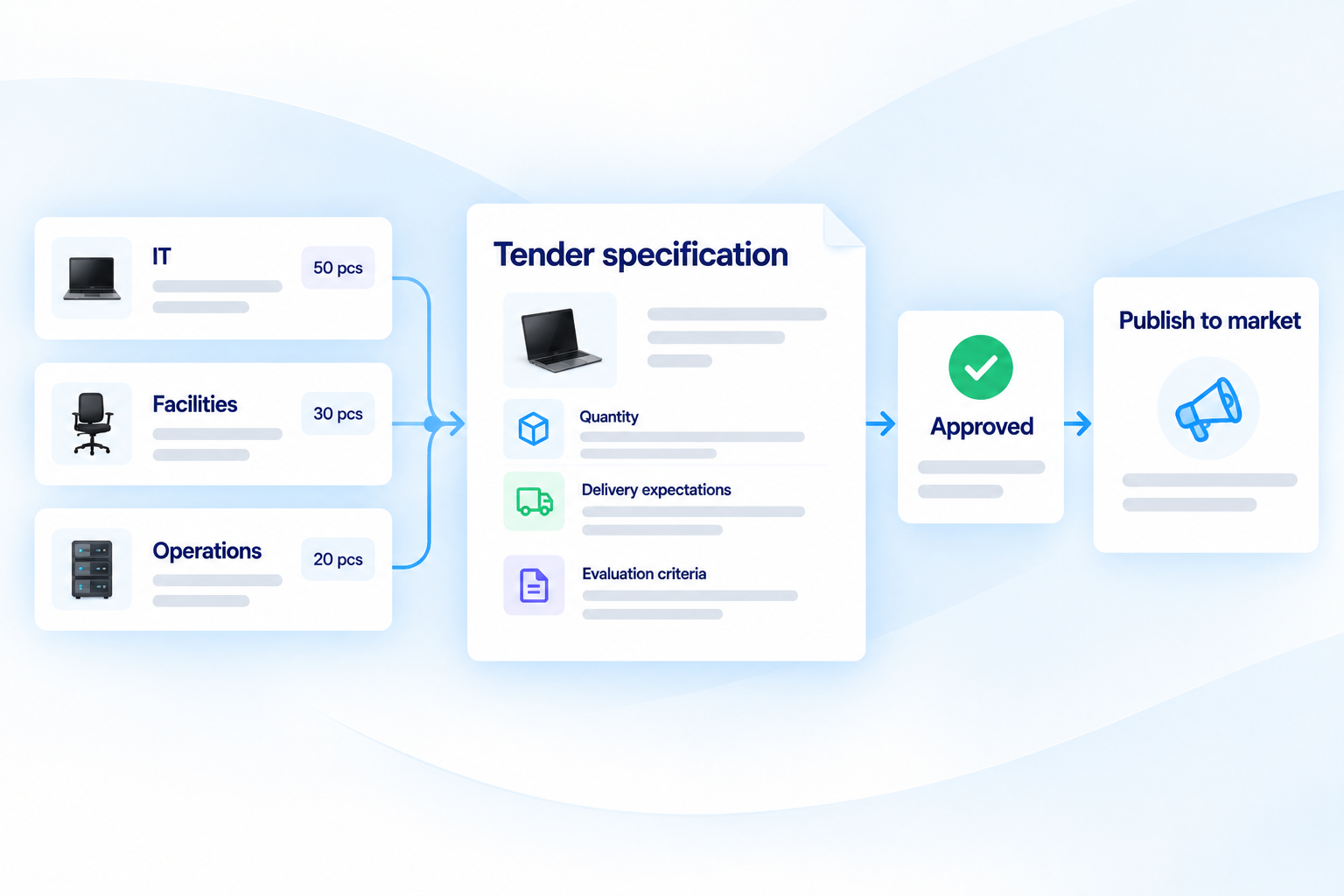
Approved demand is consolidated into a single specification with quantities, delivery expectations and evaluation criteria set in advance.
Requests across departments are grouped into one event instead of several small buys.
Evaluation weightings are fixed before offers arrive, not after.
The event is released to the market only once it has cleared its approval chain.
A qualified field invited to the same terms
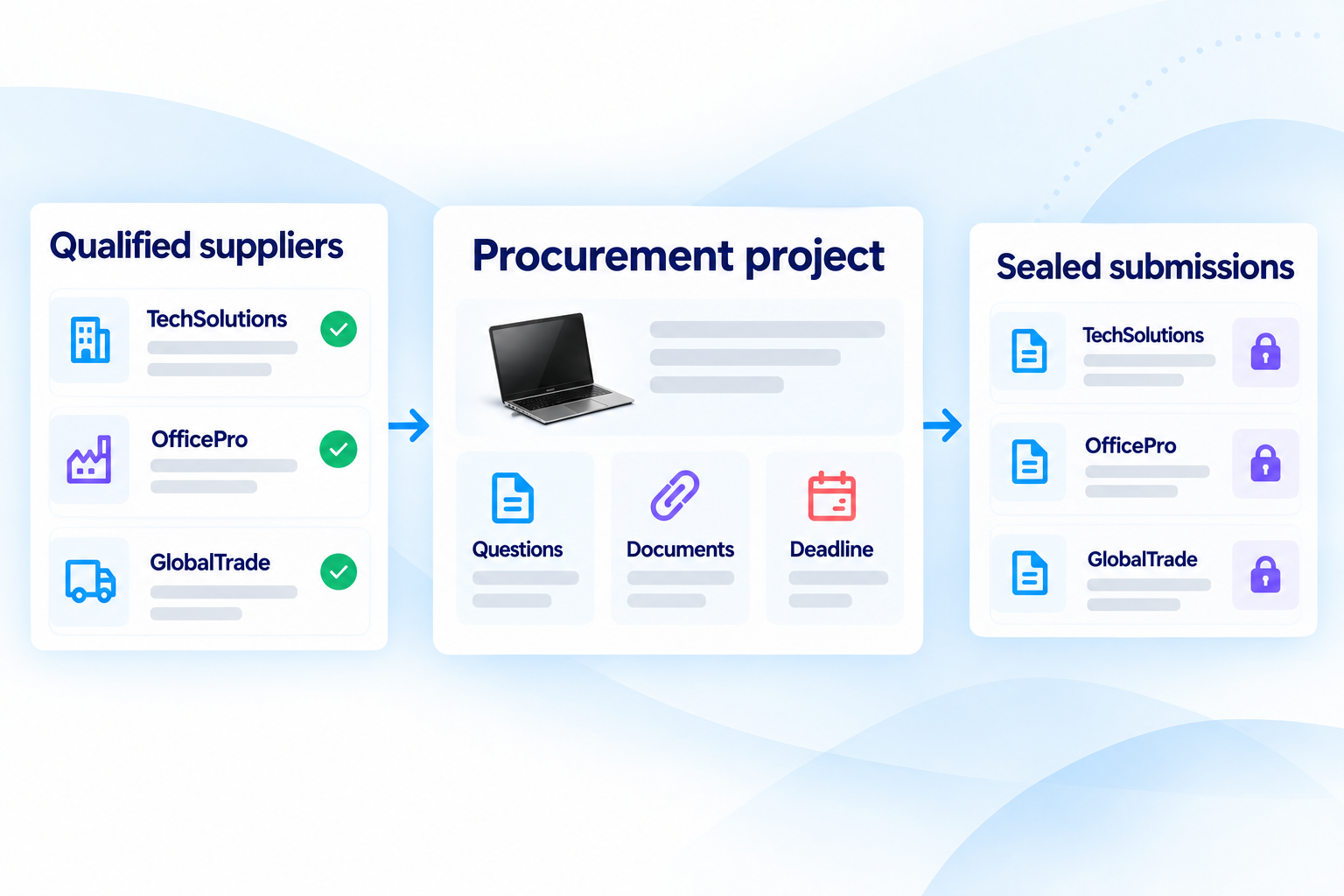
The event is published to suppliers that meet qualification requirements, with questions, documents and deadlines handled in one place.
Only suppliers that meet qualification and document requirements are invited to bid.
Clarifications and addenda are issued to all participants and logged against the event.
Offers remain closed until the deadline, with the opening recorded.
Offers evaluated on a documented basis
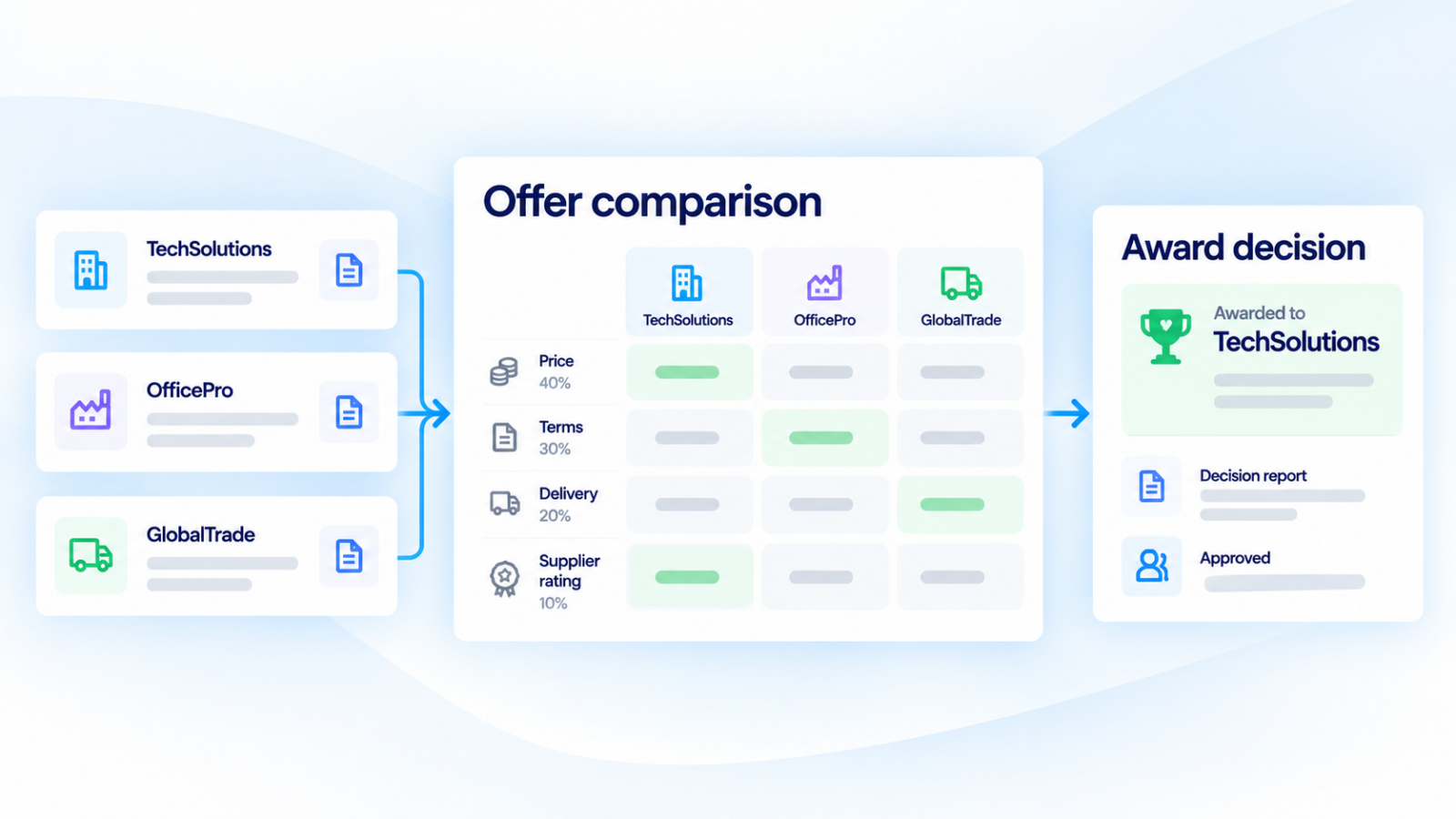
Submissions are compared line by line against the agreed criteria, and the award decision is approved and recorded with its reasoning.
Proposals are scored side by side on price, terms and delivery.
Further rounds or auctions run inside the event, with each revision retained.
The award decision, its criteria and its approvals are recorded against the event.
Awards converted into enforceable agreements
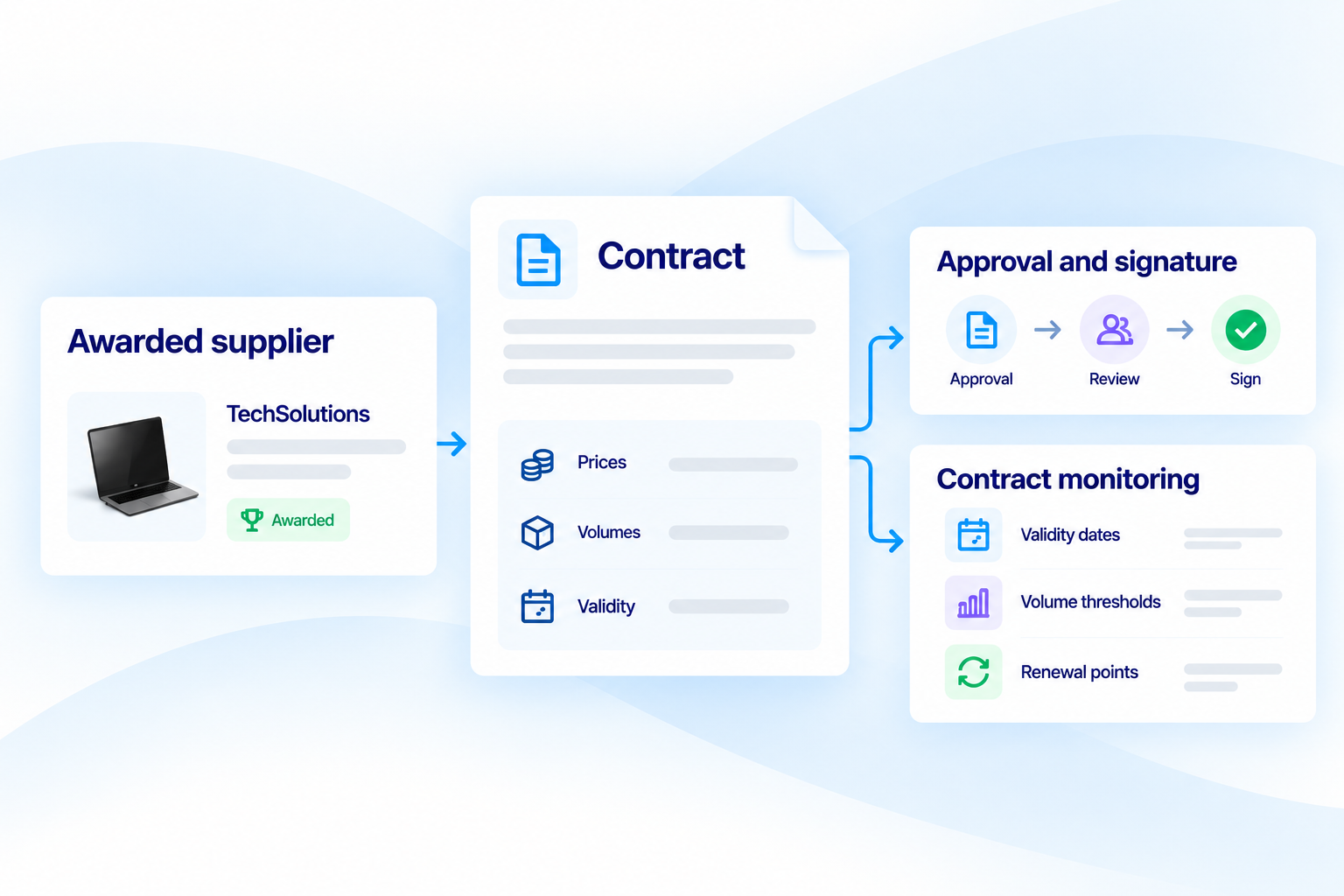
The awarded terms become a contract with defined prices, volumes, validity and obligations.
Agreed prices and conditions transfer to the contract without re-keying.
Contracts route through the approval chain and are signed inside the system.
Validity dates, thresholds and renewal points are monitored, not remembered.
What the organization gets
Competitive Awards
A qualified field bids on the same specification, on comparable terms.
Defensible Decisions
Criteria, scores, and approvals are recorded against the event, not reconstructed later.
Contracts That Match the Award
Agreed prices, volumes and terms transfer into the agreement without re-keying.
A Ready Handover to Buying
Signed agreements become the terms every purchase order inherits.
Source-to-Contract decides what the organization buys and on what terms — and hands buying an agreement it can enforce.
The products behind it
Run a sourcing event on your own category
From requirement and supplier field through evaluation and award, to the signed agreement.